

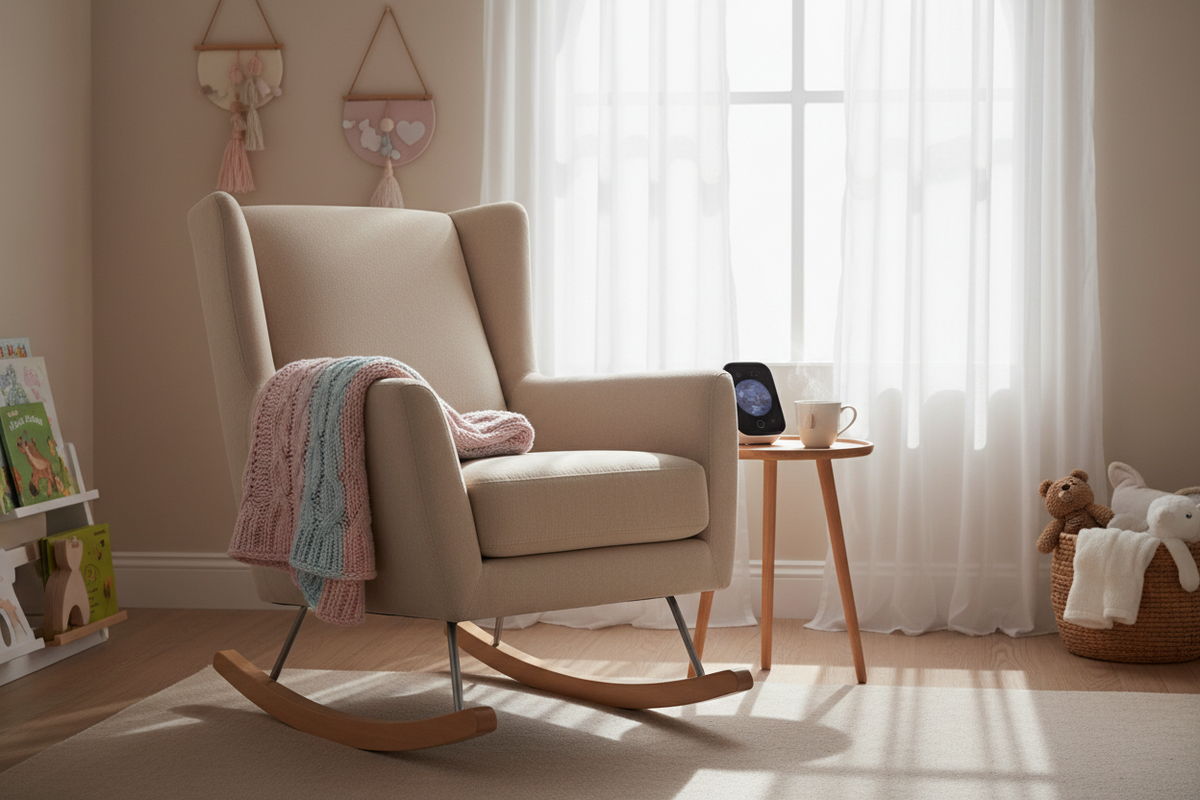
A new baby changes everything: sleep, priorities, how you use your space, and how much thought goes into every single item on that ever growing list. Somewhere in the middle of it all sits a purchase that's easy to rush, and really shouldn't be.
A nursing chair belongs firmly in that second group.
It isn't just another line ticked off a baby registry. It's where you'll feed your newborn, whether that's breastfeeding or bottle feeding, rock them after a feed, catch your breath between bottles, and steal a proper skin to skin nap together. It's where your baby settles, soothed by gentle movement and the warmth of being held, in a way no bouncer or hammock quite manages. So it's worth getting right.
Here are the criteria that actually matter, for new parents who want to make the right call before baby even arrives home.
Contents
- Mum's comfort comes first
- Settling your baby without even trying
- Design that fits your nursery
- Easy to clean and built to survive spit up
- Accessories worth having
- Fitting it into the nursery
1. Mum's comfort comes first

During a feed, whether breast or bottle, you'll likely stay in the same position for 20 to 45 minutes. Multiply that by 6 to 8 feeds a day, add in broken nights, a baby crying at 3am, colic that won't quit, and the sheer exhaustion of the fourth trimester, and it's obvious why seat comfort isn't optional.
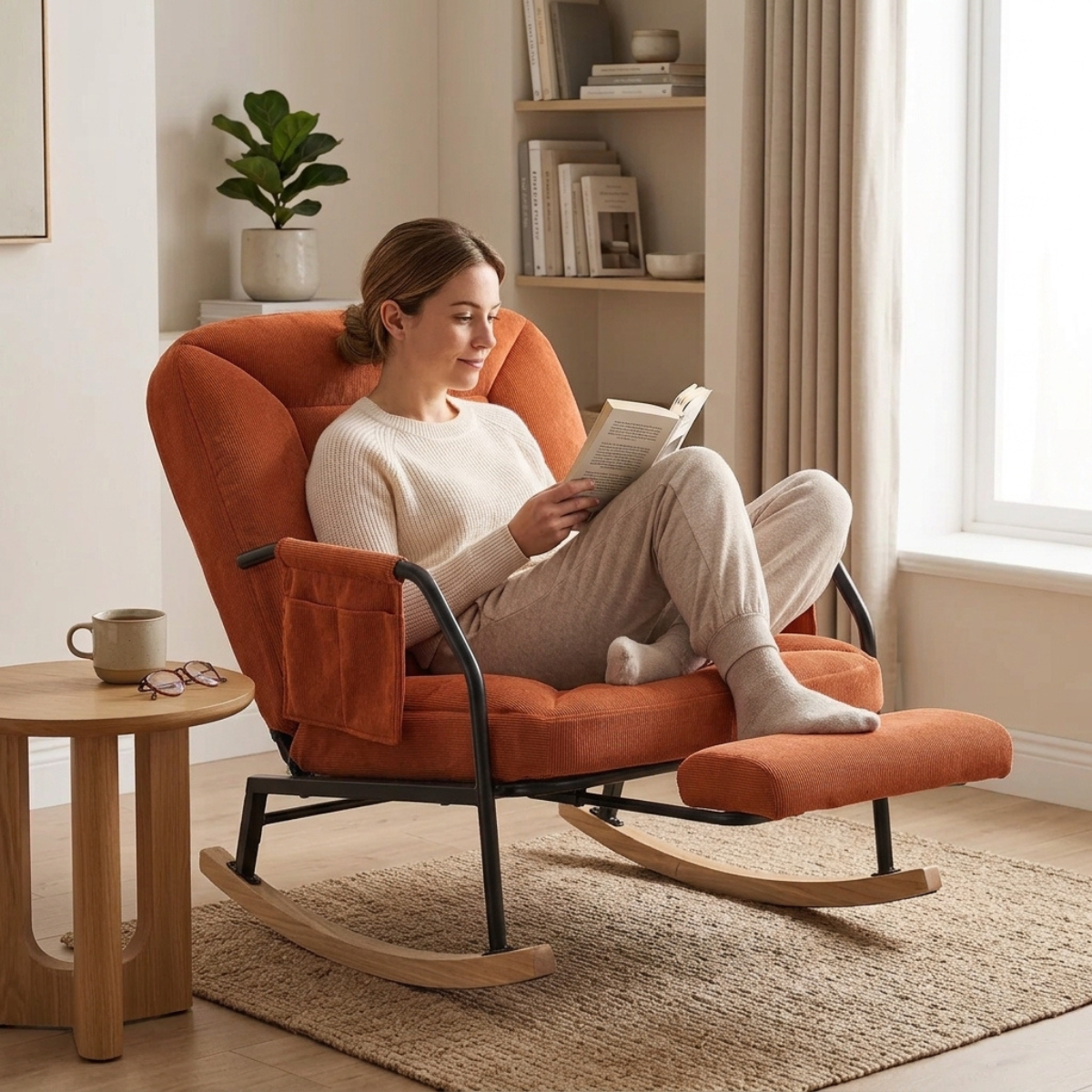
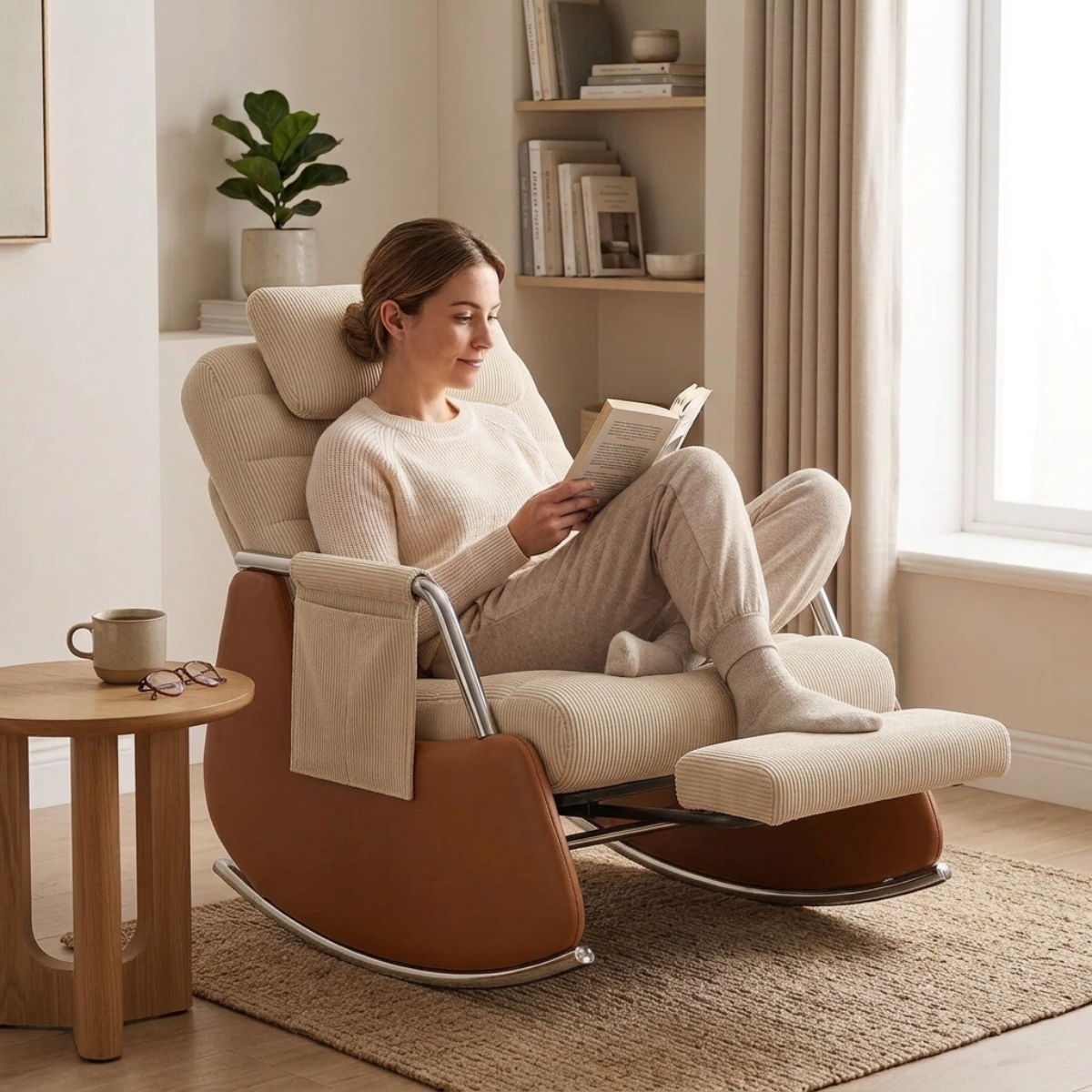
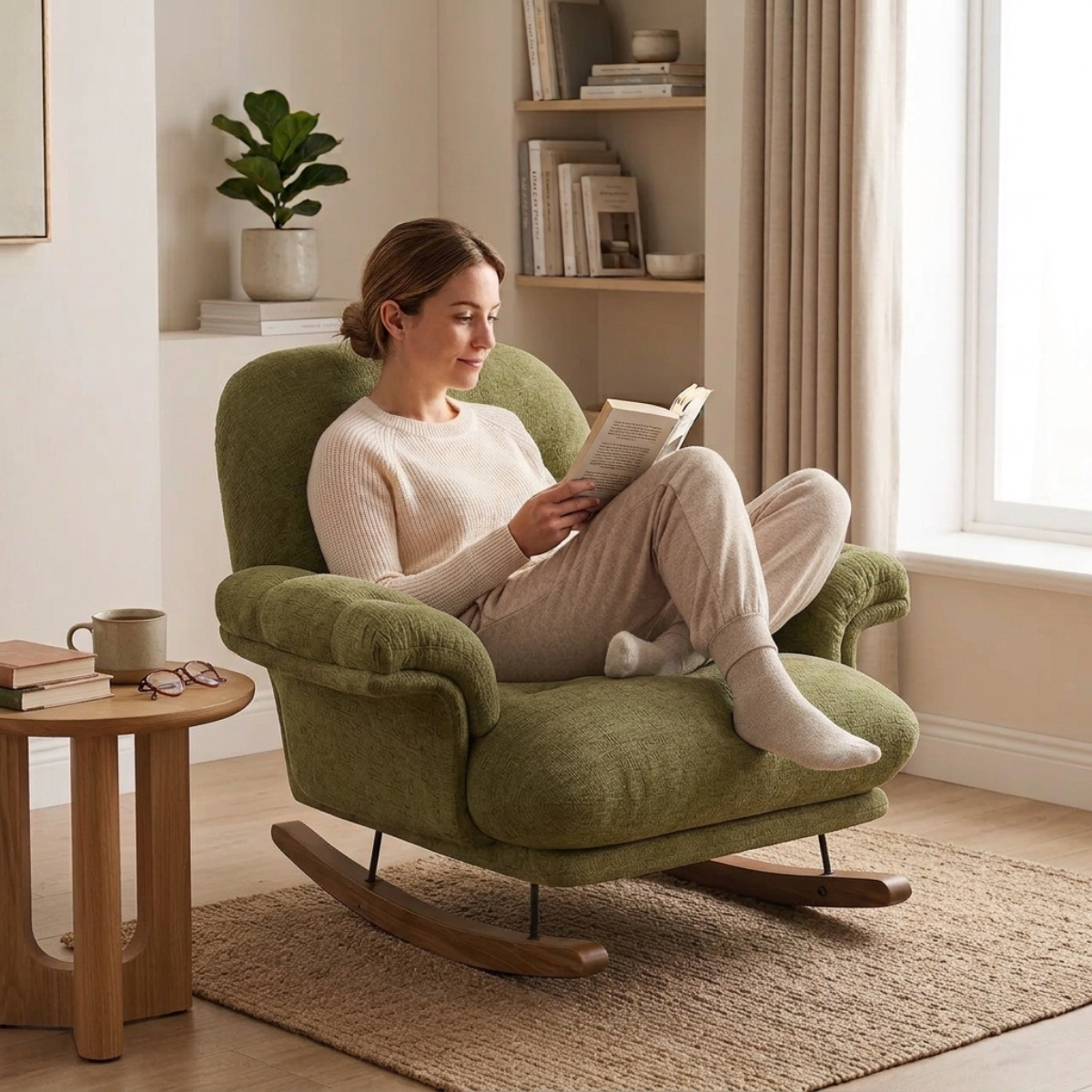
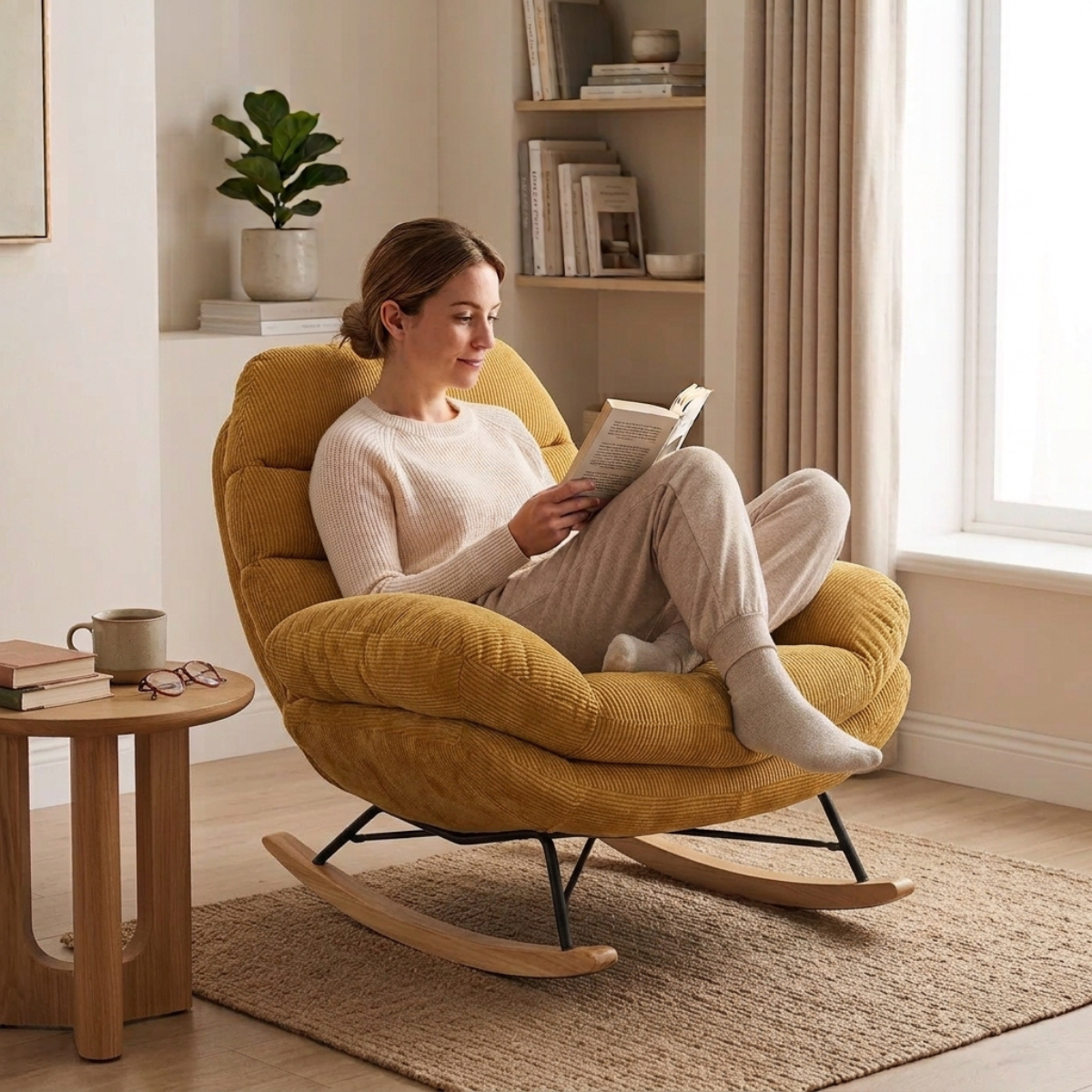
A good nursing chair needs to properly support your back, from your neck right down to your lower spine. Real lumbar support helps ease the back strain so many new mums notice in the first few weeks, especially after long nights holding a newborn. The seat itself should be soft, breathable and well padded, firm enough that it doesn't sag under your weight and your baby's. The armrests need to sit at the right height so your shoulders can actually relax while you're holding your baby. And the seat height should suit your own build, so your feet rest flat on the floor, which keeps the whole feeding position stable, takes pressure off your hips, and lets you stand up freely once your baby's finally asleep in your arms.
The best advice? Test the chair in an actual feeding position, not for a few seconds. Picture your baby in your arms, settle in properly, and stay there for a few minutes. Shoulders already creeping up? Back looking for support that isn't there? Walk away, no regrets.
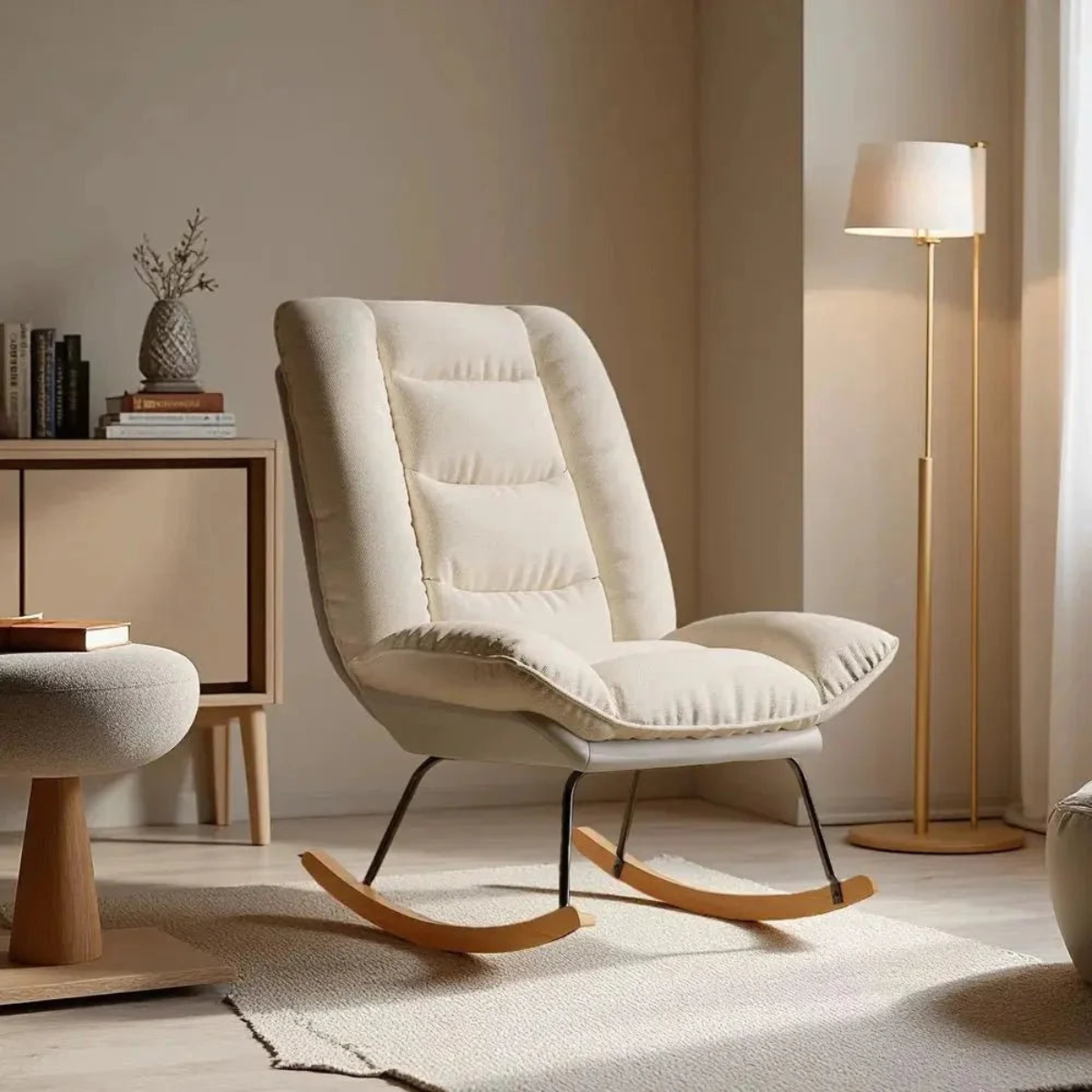
Featured nursing chair
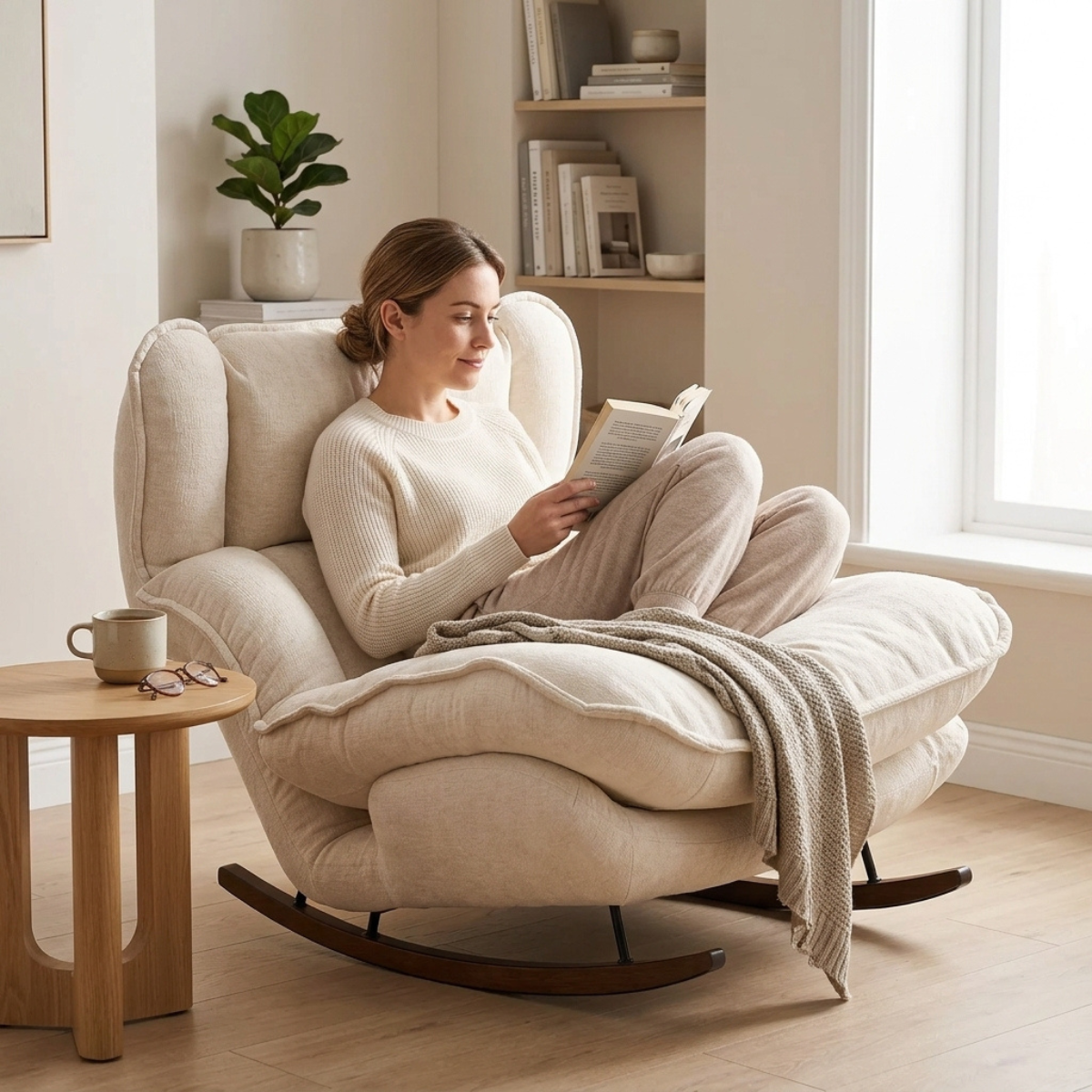
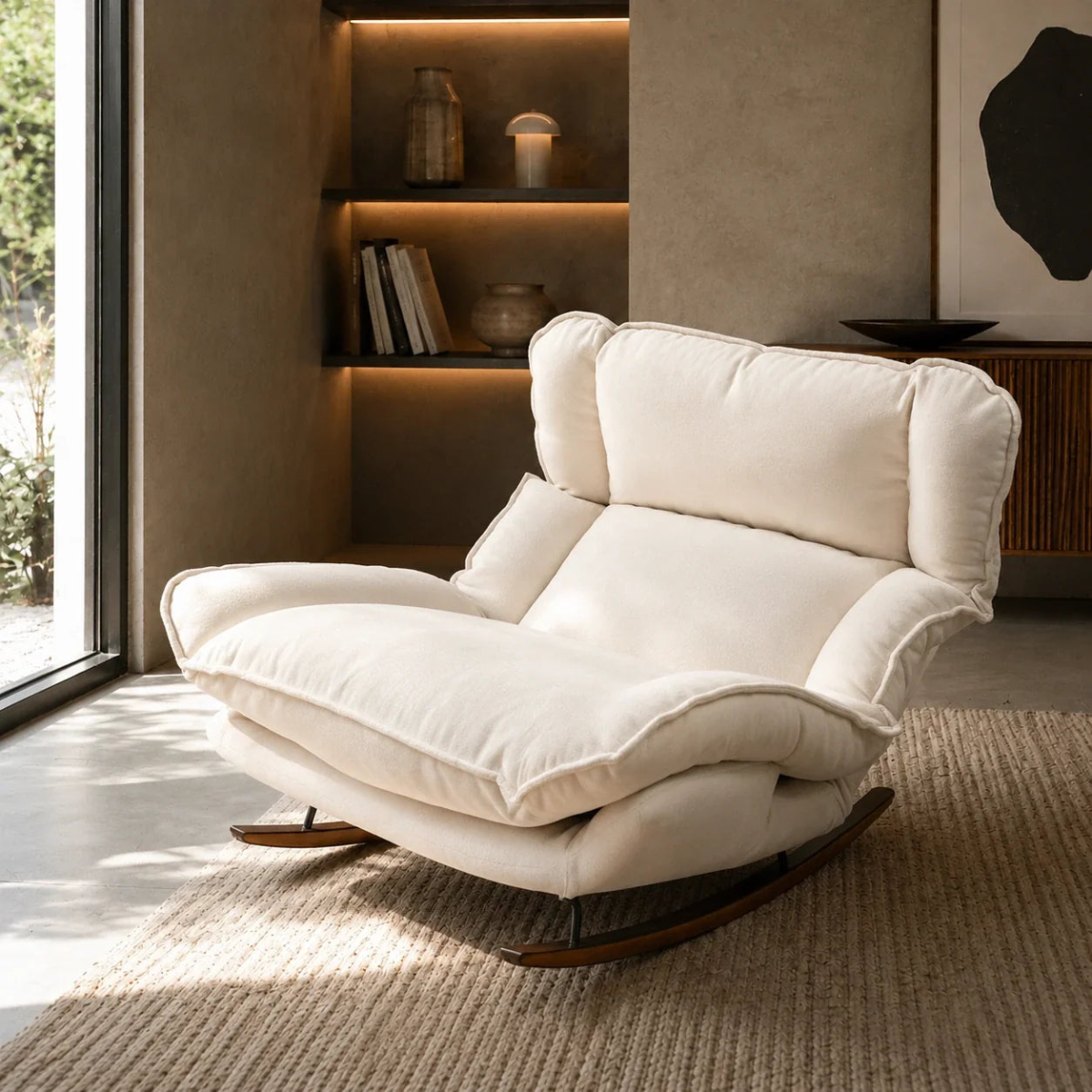
Wren, Ergonomic Velvet Nursing Chair
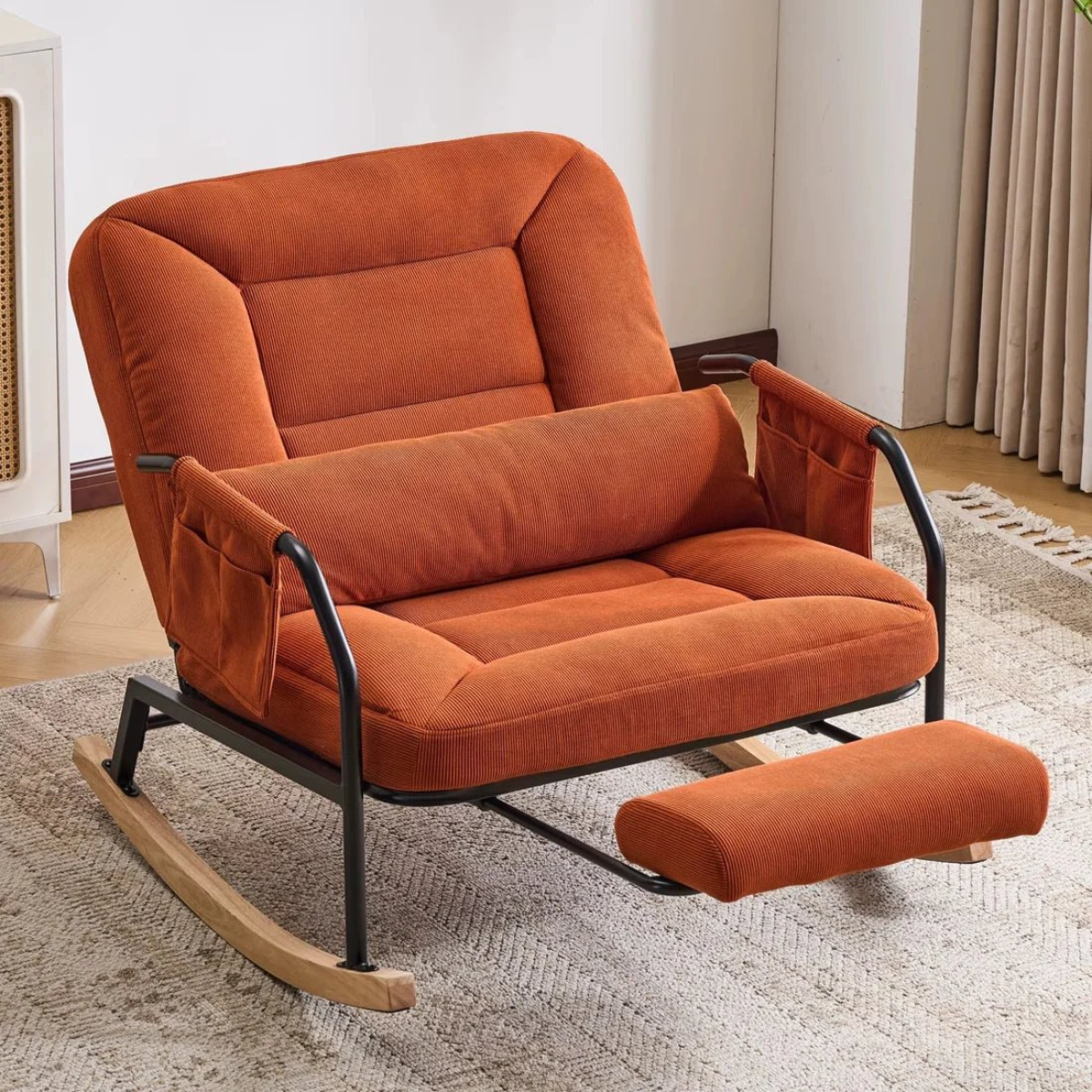
A curved backrest, adjustable headrest, lumbar cushion and included footrest, most of what's on this list, built in from the start.
2. Settling your baby without even trying
A nursing chair is, first and foremost, a rocking chair, and that's not a small detail. Gentle rocking is one of the most effective tools a parent has for calming a crying newborn and helping them settle after a feed. Many parents also find it eases fussiness after a feed, thanks to the slightly reclined position a rocking motion naturally encourages.
Why does it work so well? That steady, rhythmic movement echoes something your baby already knows: the motion felt in the womb. It's a language your baby understands long before words, before a dummy or white noise ever come into it. And that same movement tends to be just as calming for you. It's an invitation to slow down, breathe out, and simply be with your baby for a moment.
For that motion to actually help your baby drift off, it needs to be smooth and steady, no jolts, no jerking. The range of movement should stay gentle and controlled, so it doesn't wake a baby who's just settled against you. And above all, a nursing chair needs to be silent. A creak at the wrong moment can undo forty minutes of careful feeding and settling in seconds. It sounds like a small thing, until it happens at 3am, and then it very much isn't.
Did you know? The rocking motion of a nursing chair is often compared to the movement a baby feels in the womb during a parent's daily walking. It's one of the reasons a gentle rock tends to settle a newborn faster than a static seat.
3. Design that fits your nursery
Before you choose, ask yourself a simple question: which room is this chair actually going in? Nursery, your own bedroom, a corner of the living room? The answer shapes the look you should be going for.
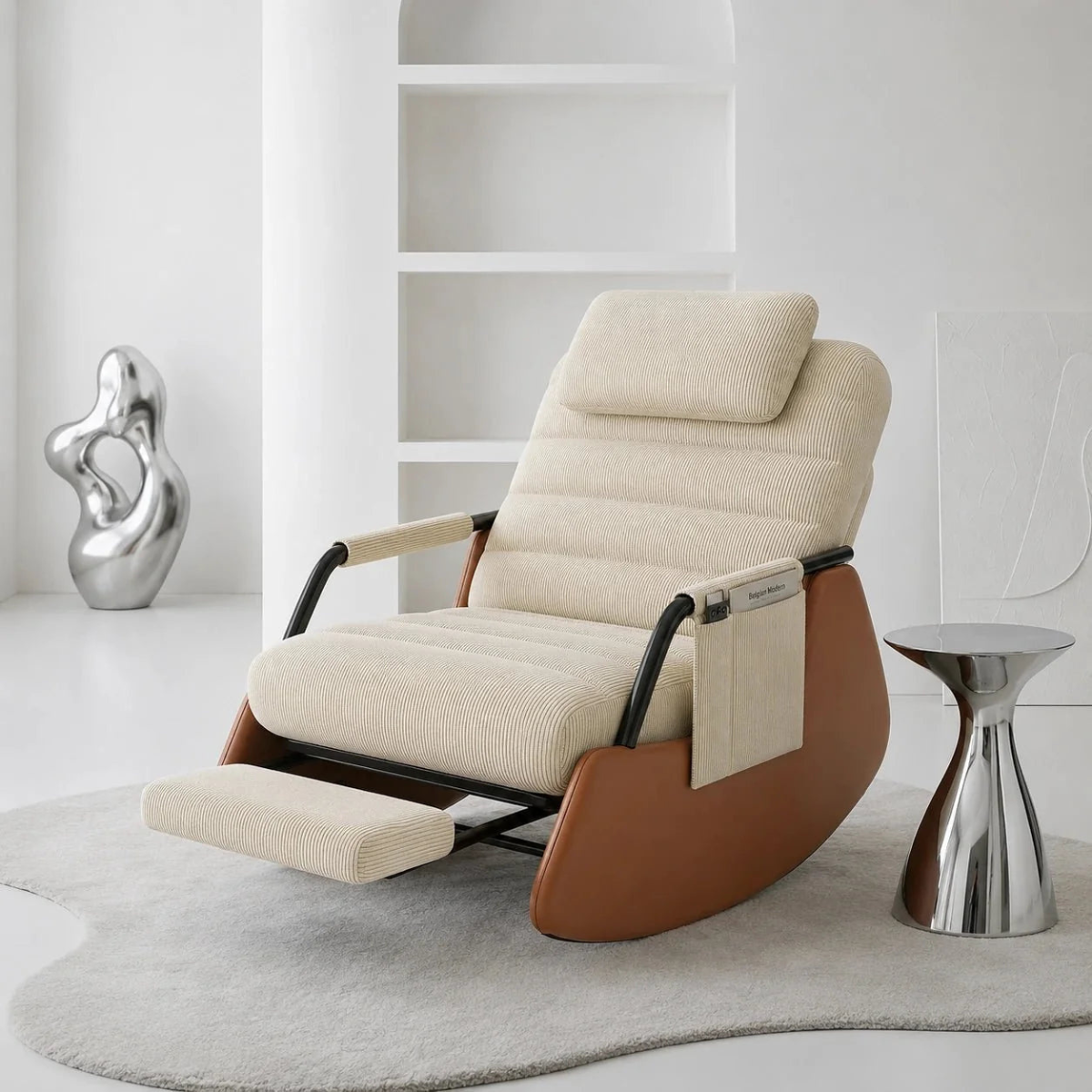
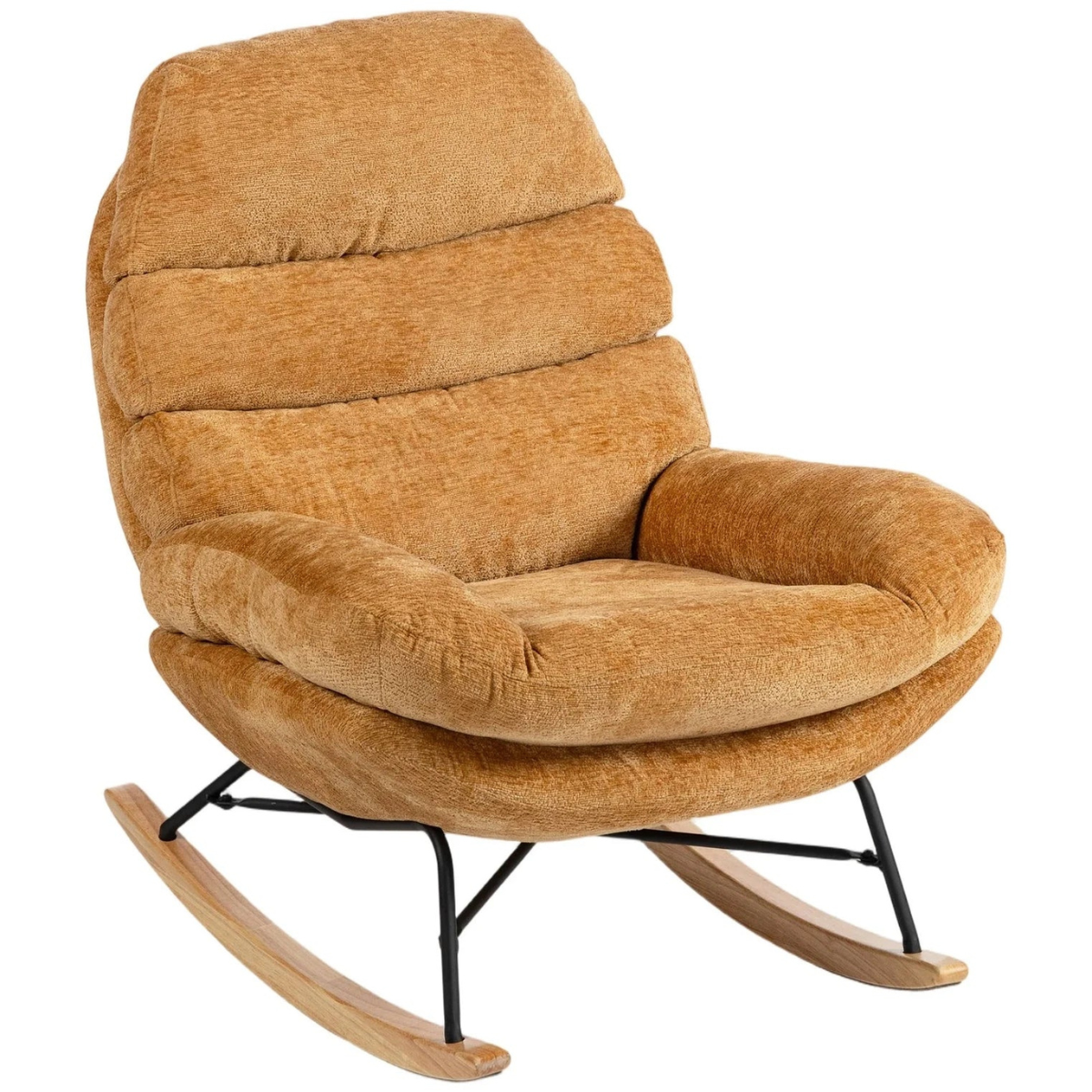
A well chosen nursing chair should sit naturally in your nursery, not fight against it. Soft, neutral tones, white, beige, mottled grey, ecru, terracotta, work with almost any scheme built around a newborn. Clean, Scandinavian style lines are popular with new parents for exactly that reason: they pair everyday comfort with a look that doesn't feel like "baby furniture." If you're coordinating with a cot or a chest of drawers, several models come in more than one colourway.
This chair is going to be the centrepiece of the nursery. It's worth choosing one you actually like looking at, because a chair you love is one you'll want to settle into for every feed. In those first few months, that matters more than you'd think.
4. Easy to clean, built to survive spit up
Breastfed or bottle fed, babies make a mess. Spit up, regurgitated milk or formula, a badly timed burp, the odd nappy leak, not to mention the changing bag dumped in a hurry. The nursery is fertile ground for stains, and your nursing chair will see plenty of them.
To make life easier, look for a removable, machine washable cover, by far the most practical option between feeds and nappy changes. Microfibre or organic cotton upholstery is a safe bet: breathable, hard wearing, easy to wipe clean, and soft against your baby's skin. A forgiving colourway helps too, life with a newborn isn't exactly spotless.
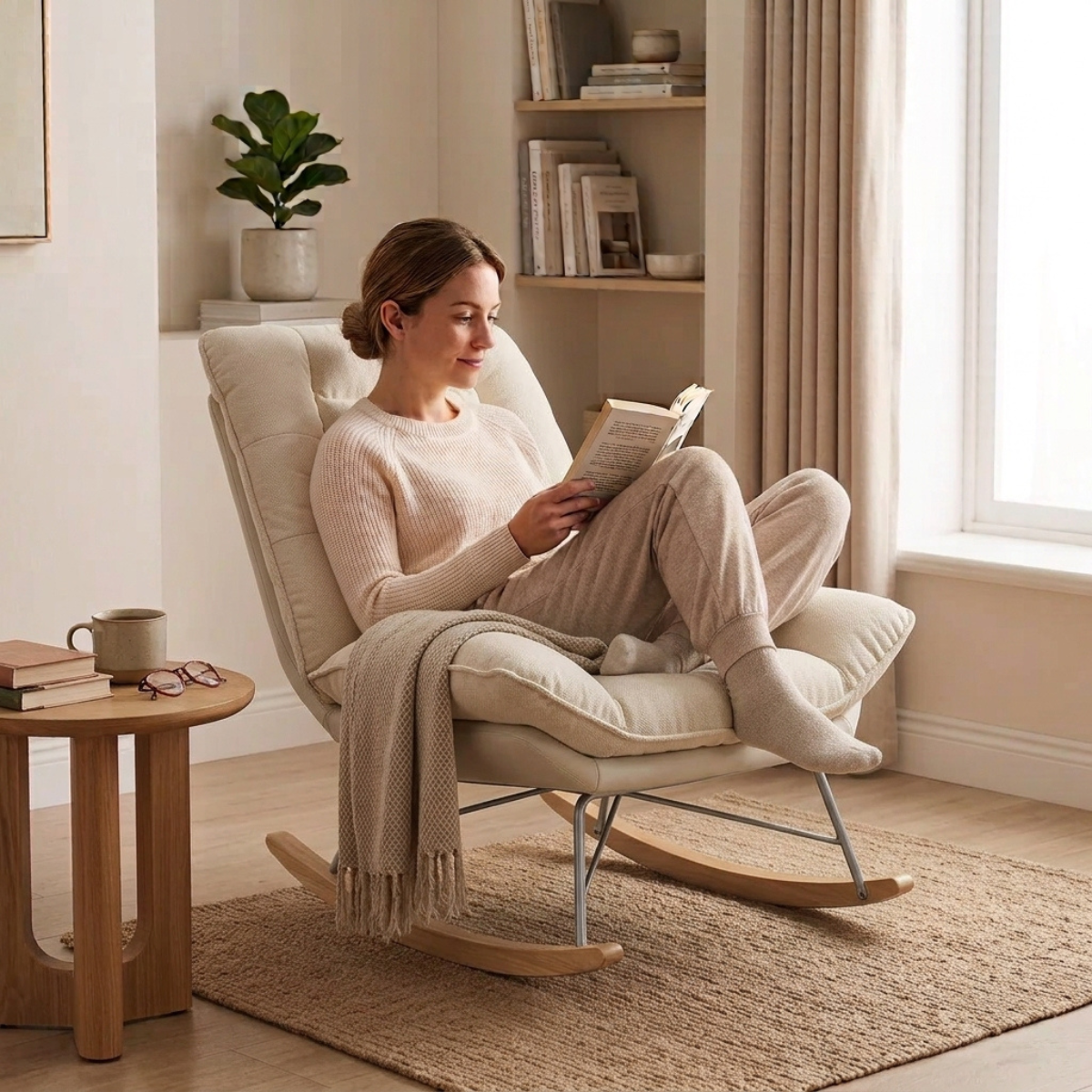
One small trick: drape a muslin or a throw over the chair from day one. It's easy to wash the moment something happens, and your nursing chair stays looking good for the long run.
5. Accessories worth having
Found a chair you love but it's not quite perfect for feeding comfortably? The right accessories can usually fix what's missing.
A lumbar cushion is worth having if the chair's lower back support isn't quite enough, especially during the early weeks when nights are short and feeds run long. Some nursing chairs come with a removable one built in, which is ideal. A nursing pillow supports your baby during a feed, takes the strain off your arms and back, and helps maintain a good latch. It's a genuine lifeline in those first few weeks of frequent feeding.
A footrest is useful if the seat height doesn't quite let your feet rest flat, particularly in the weeks right after birth. It stabilises your position and eases pressure on your hips. A headrest comes in handy for the naps you'll grab whenever your baby finally settles. Some parents also like to keep a pump or the changing bag within reach, for the moments your baby's asleep on you and you really don't want to move. And for night feeds when the room turns chilly, having a soft blanket within arm's reach, without having to get up with your baby still in your arms, makes a genuine difference.
6. Fitting it into the nursery
The nursery is often the smallest room in the house, and your nursing chair needs to fit without turning it into an obstacle course. Before you buy, measure the space you have and factor in the rocking motion itself: the chair needs to move freely, without hitting the wall behind it or the cot in front.
Leave at least 40 to 50cm clear at the front and back. If your nursery is on the smaller side, several compact models are built specifically for tight spaces, without giving up comfort. There's no reason to choose between practicality and genuine comfort for you and your baby.
In short: what a good nursing chair needs to deliver
| Criterion | What to check |
|---|---|
| Seat comfort | Soft, breathable seat, real lumbar support, height suited to your own build |
| Rocking motion | Smooth, steady and silent, no creaking |
| Armrests | Padded, at the right height to hold your baby without strain |
| Care | Removable, machine washable covers |
| Design | Soft tones, cosy style, fits your nursery |
| Size | Free rocking range, at least 40 to 50cm clear front and back |
| Accessories | Lumbar cushion, nursing pillow, footrest, headrest |
Finding the right nursing chair for you
At HavenNest, our nursing chair collection is built around new parents, from the maternity ward through those first months with your baby. Real comfort for feeding, a gentle and silent rocking motion, soothing movement for your baby, and a design that actually belongs in your nursery. It's all there.
Because those first weeks with your baby don't come round twice. You might as well be properly settled to live them.
Browse the HavenNest nursing chair collection
Frequently asked questions
When should I start using a nursing chair?
From day one. Most parents start using theirs from the moment they're home from hospital, for every feed, nappy change pause, and quiet moment with a newborn.
Rocking or gliding, which is better for nursing?
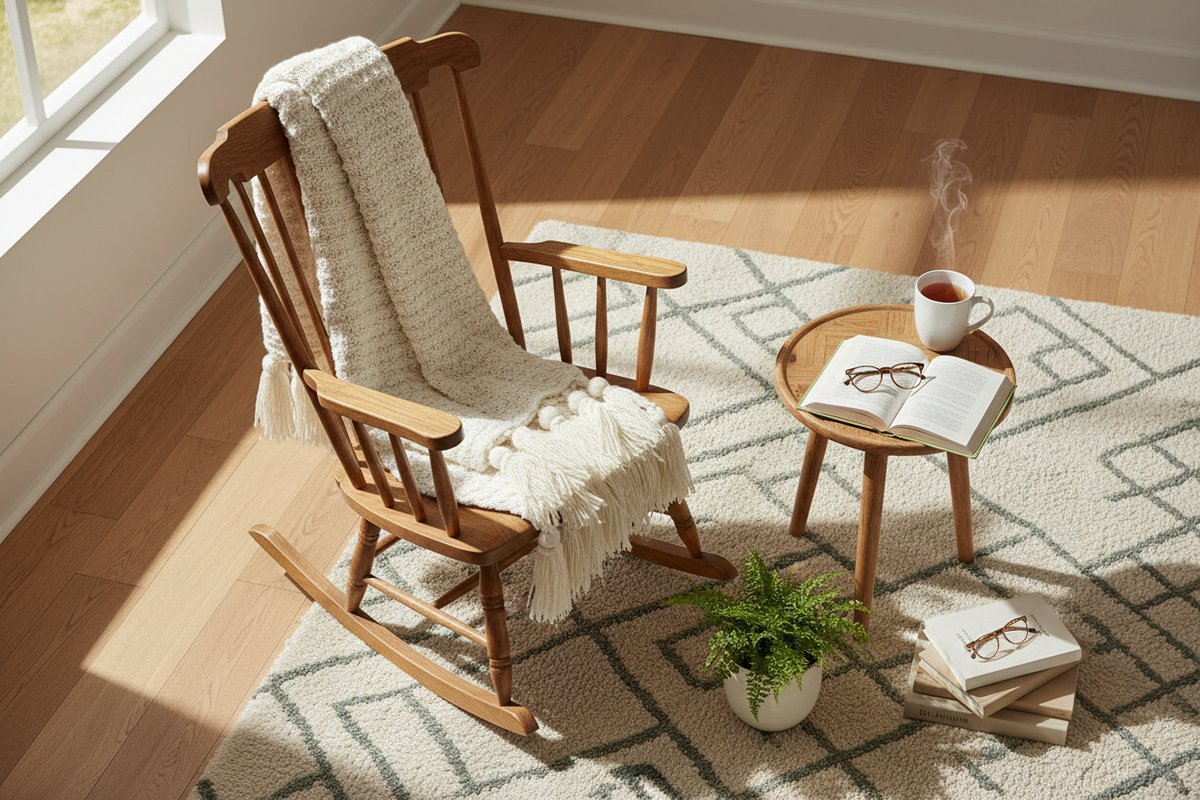
Both work well. A rocking chair moves on curved runners, a glider swings on a fixed track. In practice, the day to day feel is similar for both, what matters more is the support, the padding, and how quiet the motion is.
Can my partner use the nursing chair too?
Yes, and most do. A good nursing chair suits a range of body shapes and gets used by both parents, for feeds, burping, or simply settling the baby together.
Will I still use it once my baby's not a newborn anymore?
Usually, yes. Most parents keep using theirs well beyond the newborn stage, for bedtime stories, cuddles, and quiet moments long after feeding is over.

Leave a comment
All comments are moderated before being published.
This site is protected by hCaptcha and the hCaptcha Privacy Policy and Terms of Service apply.